Explore the Coastal Prairie
Coastal Prairie Conservation
The Coastal Prairie Conservancy partners with private landowners, communities, and conservation groups to sustain a resilient Texas by protecting the coastal prairies, wetlands, farms, and ranches that make our region so special. Our goal is simple and lasting: to safeguard these lands now and forever.
The Texas coastal prairie once stretched across 6.5 million acres. Today, less than 1% of that original landscape remains untouched, though many thousands of acres still have the potential to be restored. CPC is working to create a connected network of conserved land across nine counties. Already, more than 33,000 acres are protected by CPC through fee ownership and under conservation easements.
A conservation easement is a voluntary legal agreement between a landowner and a land trust that permanently protects the conservation values of the land. Values can include wildlife habitat, rare natural areas, water resources, Texas’ cultural heritage, and scenic beauty. With an easement, landowners can continue to live on, farm, hunt, and enjoy their land. They can also sell the property or pass it on to future generations with the conservation protections still in place.
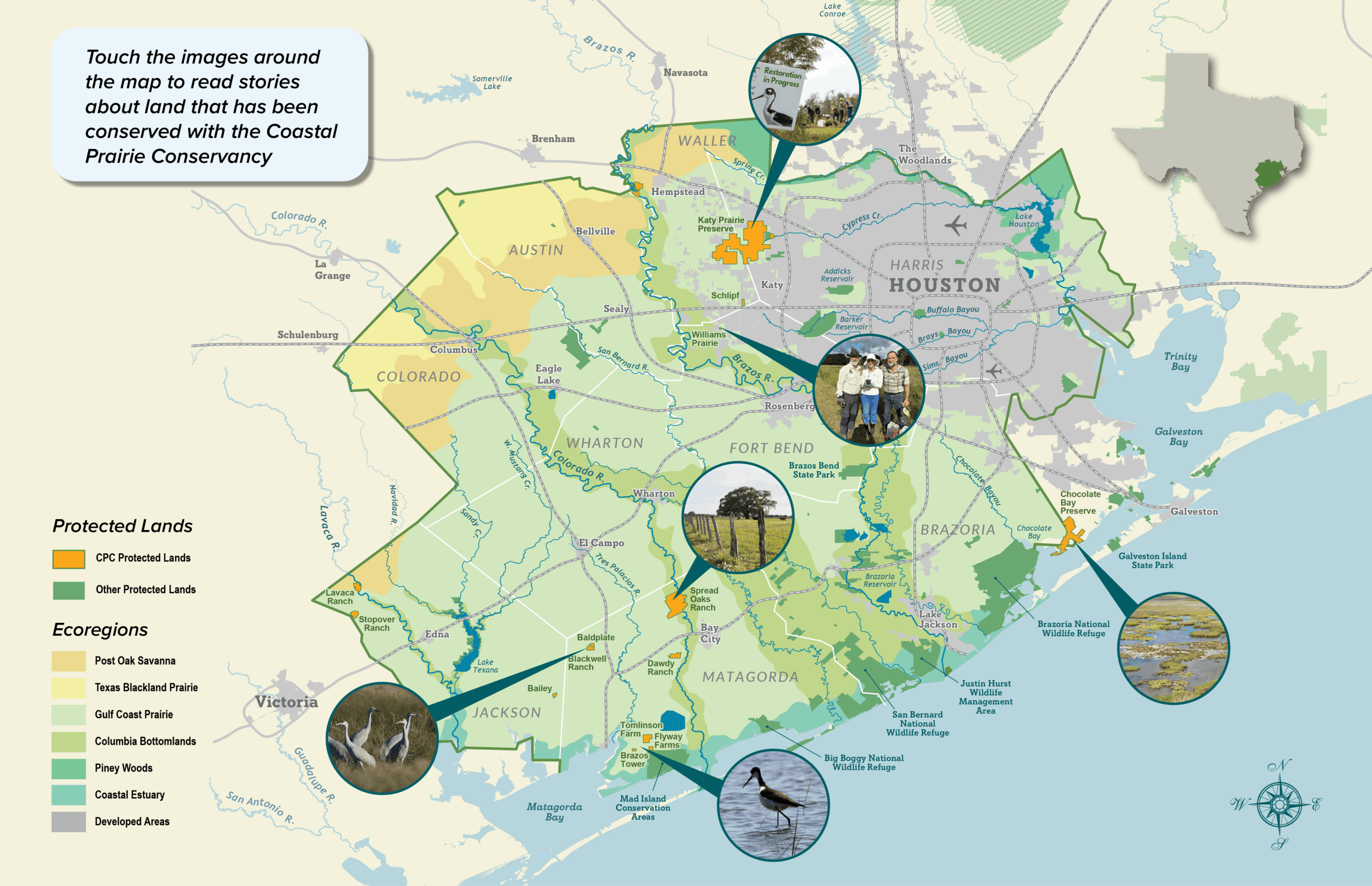
Explore a selection of CPC’s conserved properties in the coastal prairie by touching on the map’s image bubbles to see what landowners across the region have achieved.
Spread Oaks Ranch
Landowner Forrest Wylie grew up hunting, fishing, and farming in the coastal plains between the Brazos and Colorado Rivers. In 2012, he began acquiring three ranches along five miles of the Colorado River, eventually creating Spread Oaks Ranch which is located near Markham in Matagorda County.
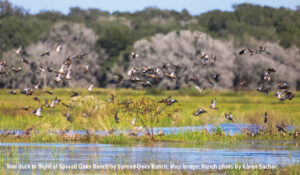
Spread Oaks Ranch has many vibrant habitats, including ancient Southern Live Oaks, native tallgrass pastures, and conventional and organic crop fields. Constructed wetlands provide much needed habitat for wintering ducks, geese, and sandhill cranes. The pasture supports 500 Brangus cattle, and farming constitutes around 2,500 acres.
Wylie wanted to make sure this special place was protected forever, so he worked with the Coastal Prairie Conservancy to place a donated conservation easement on all 5,332 acres. This legal agreement ensures that the land will always be conserved for its natural beauty and resources.
Wylie has also showcased how easements and profitable commercial enterprises can coexist with the opening of Spread Oaks Ranch Resort. Visitors to the resort can take part in duck-hunting and fly-fishing experiences, farm-to-table fine dining, weddings, small concerts, and even corporate events.
The protection of Spread Oaks Ranch is a testament to Wylie’s commitment to leaving the land better than he found it.
Chocolate Bay
Chocolate Bay Preserve covers an impressive 4,700 acres of coastal habitat just inland from Galveston Island. The Brazoria National Wildlife Refuge is only three miles away, just across Chocolate Bay. Together, these conserved lands help safeguard 22 miles of Texas coastline as the pelican flies.
The land is owned and cared for by the Galveston Bay Foundation (GBF), one of the Coastal Prairie Conservancy’s (CPC) close partners. GBF bought the land using special funds set aside to restore the Gulf after the 2010 Deepwater Horizon oil spill. CPC’s holds the conservation easement, working with GBF to ensure the land is protected forever.
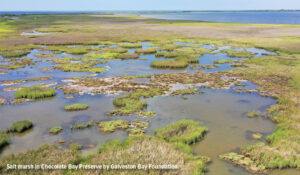
Chocolate Bay Preserve protects a rare blend of native tallgrass prairie and prairie pothole wetlands. Its fresh-to-brackish marshes support thousands of migratory birds, while salt marshes, tidal flats, and oyster-shell beaches along the shoreline serve as vital nurseries for young fish, shrimp, and crabs bound for the Gulf of Mexico.
To keep the prairie and wetlands healthy, GBF uses smart land-management tools such as rotational cattle grazing, prescribed burns, invasive plant removal, and native grass and wildflower plantings. GBF also helps slow down erosion by maintaining levees and building shoreline protection projects – critical projects which protect coastal wetlands that defend coastal communities.
Katy Prairie Preserve
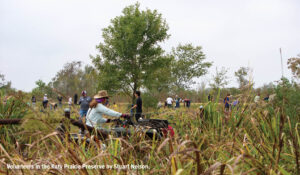
The Katy Prairie Preserve is one of Texas’s great conservation success stories. The Katy Prairie Conservancy (now CPC), founded in 1992, was established to protect the vast prairies and wetlands west of Houston before they were converted to other uses, especially commercial and residential development. Today, CPC conserves more than 19,500 acres of prairie and wetlands on the Katy Prairie.
The Katy Prairie Preserve is composed of roughly two-thirds CPC-owned land and one-third privately owned land protected by conservation easements. Together, these lands form a preserve that is equal to 13 Memorial Parks.
Much of the Katy Prairie Preserve is still in active cattle ranching and rice farming – activities that work hand-in-hand with CPC’s conservation goals of restoring the prairie and providing wildlife habitat. The preserve system continues to grow, notably with the 2025 addition of the 220-acre Three Oaks Farm.
The preserve also acts as a sponge, with its prairie and wetland areas absorbing excess rainfall. In doing so, these areas provide vital flood protection for nearly half a million people living in the Cypress Creek Watershed, one of the largest watersheds by area in Houston.
Today, CPC is also offering more restoration, learning opportunities, and ways for the public to explore and enjoy the Katy Prairie Preserve.
Blackwell Ranch
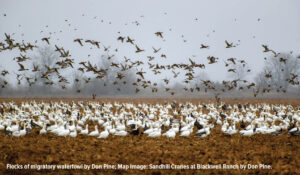
Jim Blackwell, the owner of Blackwell Ranch, is a lifelong hunter and nature enthusiast, owning approximately 300 acres in Matagorda County. Inspired by neighboring owner of Baldpate Farms, who had already conserved their land with CPC, Jim worked to place a conservation easement on his property with CPC. Together, Jim and his neighbor have permanently protected a combined 475 acres of high-quality wildlife habitat for future generations.
About half of Blackwell Ranch is covered by coastal Live Oak woodlands, featuring multiple oak species, American beautyberry, and dwarf palmetto. Within the woodlands are globally rare habitats of remnant prairie pothole wetlands and pockets of Texas Coastal Saline Prairie.
Another third of the property consists of constructed wetlands restored from historic rice fields. Jim continues to flood these fields and carry out restoration work, creating critical wetland habitat for the millions of birds that travel the Gulf Coast Central Flyway during seasonal migrations.
This diverse landscape provides essential nesting and brooding habitat for the Mottled Duck, a species of concern. The ranch’s exceptional ecological value is a prime reason the Texas Coastal Prairie Initiative (TCPI) chose the site for its first conservation project. CPC is the lead partner for TCPI, which funds land conservation projects to save the imperiled coastal prairie ecosystem.
Brazos Tower and Flyway Farm
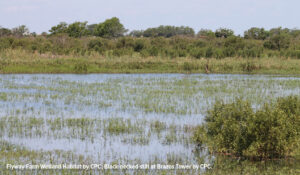
Along the Texas coast near Matagorda Bay, a mosaic of constructed wetlands, upland grasslands, and farmland, has become a haven for thousands of birds each year. Roger Soape owns three conserved properties in Matagorda County – Baldpate Farms, Flyway Farms, and Brazos Tower Farm, the latter two in partnership with the Hanson Family. All these lands are permanently conserved through conservation easements with the Coastal Prairie Conservancy.
Once rice farms, the land has since been restored and offers excellent wildlife habitat. With help from Ducks Unlimited, 166 acres of shallow wetlands were built in the 1990s. Together with grasslands and croplands, they support nesting Mottled and Whistling Ducks, foraging wading birds, songbirds like Le Conte’s Sparrow, and migrating Green-winged and Blue-winged Teal. In fall and winter, hundreds of birds can be seen in a single day.
For Roger, conservation is deeply personal. “I fell in love with everything out there,” he says. “Not just game, but otters, eagles, butterflies.” Today, he shares that legacy with his grandson. “I want him to have what I had,” Roger says. By placing conservation easements on their land, landowners like Roger ensure these landscapes continue to support wildlife, farming, and family traditions for generations to come.
Williams Prairie
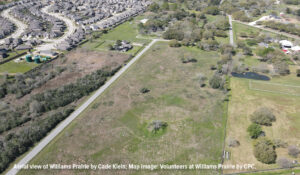
Williams Prairie may be small (only 10.7 acres), but it plays a big role in the story of the Coastal Prairie Conservancy (CPC). Protected in 1997, it was CPC’s very first conservation easement. The land is now owned by CPC, having been generously donated by William Williams in 2002.
Today, Williams Prairie is a prairie outpost among expanding Houston suburbs. The land is open every day from dawn to dusk, with a mowed trail that meanders through tall grasses and small wetland depressional areas. Visitors have a chance to enjoy the beauty of the prairie in its natural form, with opportunities to spot species like the Scissor-tailed flycatcher, cottontail rabbit, and striped skunk.
For decades, the land was used only for hay production, which helped keep the native plants thriving. Now, diverse native plant communities at Williams Prairie provide an important seed bank for Katy Prairie restoration projects. Volunteers can help collect seeds from native prairie plants, help maintain the public trails, and remove invasive species.